Electrical warning signs that need attention
Electrical hazards are not always dramatic. A faint crackle behind a socket, lights that dim across several rooms or a fitting that feels unusually warm may be early signs of a developing fault. Some problems are obvious, while others occur intermittently. The safest response is to notice the pattern, stop using suspect equipment and arrange an appropriate inspection.
Not every flicker indicates an emergency: a loose lamp or incompatible dimmer can produce similar symptoms. Yet an unexplained change across several fittings deserves investigation because the cause may involve a shared connection or supply issue. A visible spark, repeated shock, burning smell or smoke is more urgent.
The following guide helps London householders distinguish everyday observations from warning signs that should never be ignored. It is not a guide to opening sockets, testing live circuits or carrying out DIY electrical repairs.
1. A burning smell from a socket or consumer unit
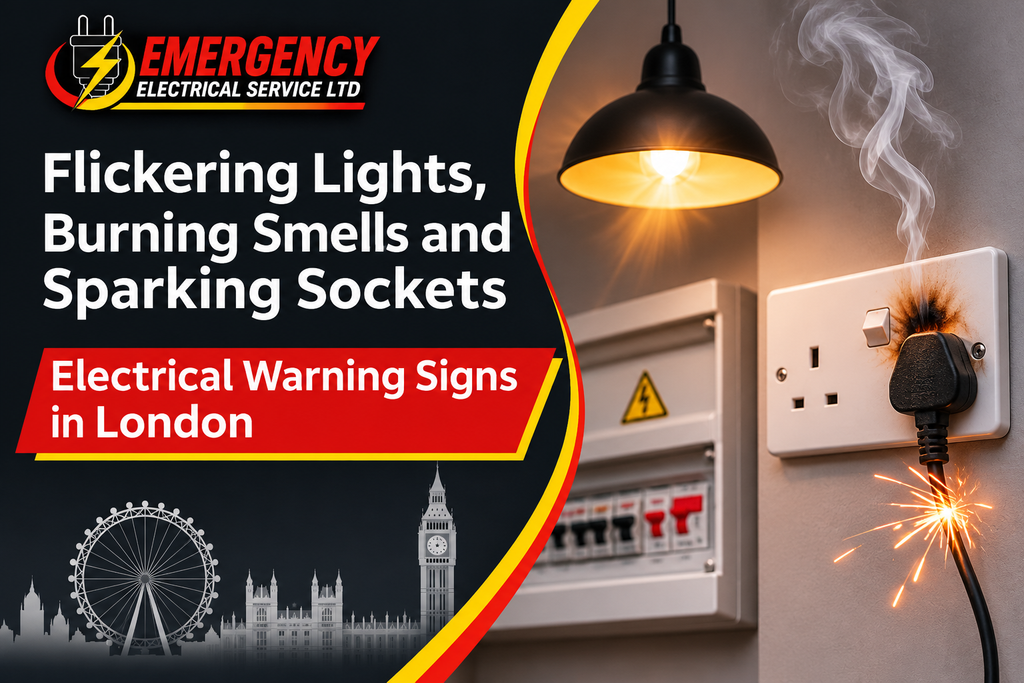
A burning, hot-plastic or unusual fishy smell around electrical equipment may indicate overheating insulation or a failing connection. The smell can appear before smoke or visible damage. Do not lean close to identify the source or continue using the socket to see whether the smell returns.
Stop using the affected equipment and isolate power only if safe. If the consumer unit itself is hot, smoking or making unusual sounds, keep clear and seek urgent professional help. Where smoke or fire is present, leave and call 999. The absence of visible flames does not establish that the wiring is safe.
2. Sparking, crackling or buzzing fittings
A tiny momentary spark may sometimes be noticed when a plug is connected under load, but persistent sparking, visible arcing, loud crackling or scorch marks are not normal conditions to ignore. A loose contact can generate heat and progressively damage a socket or switch.
Do not remove the faceplate, push loose accessories back into the wall or attempt to tighten terminals. Stop using the affected fitting and arrange an electrician to inspect the accessory and connected wiring. If there is active arcing or smoke, keep away and treat the situation as urgent.
3. Flickering lights across several rooms
One flickering lamp can be caused by a bulb, driver or dimmer issue. Flickering that affects multiple rooms at once may indicate a shared connection, neutral problem, overloaded circuit or supply disturbance. A pattern that coincides with a large appliance switching on is useful information for a professional.
Record which lights are affected and whether they brighten as well as dim. Do not open switches, ceiling roses or the consumer unit. Where the problem affects neighbours too, contact the network operator through 105. If it affects only your home, arrange electrical fault finding.
4. Warm sockets, discolouration and damaged switches
A socket or switch that becomes abnormally hot, has brown marks, feels loose or has cracked plastic should not remain in service. Heat may come from poor contact, a damaged accessory or another fault. Repeatedly plugging appliances into a worn socket can worsen the problem.
Do not cover a hot fitting, spray it with water or use an extension lead as a permanent workaround. Leave it unused and have a qualified electrician assess the accessory and circuit. Socket replacement may be straightforward, but the connected wiring must also be considered.
5. Electric shocks or tingling from equipment
Even a mild shock or tingling sensation is a reason to stop using the item and seek qualified advice. Possible causes include damaged insulation, an earthing or bonding defect, or faulty equipment. The exact cause cannot be established by how strong the sensation felt.
Do not touch the item again to test it. Keep other people away, and seek urgent medical advice where appropriate after an electric shock. If a person is still in contact with live electricity, do not touch them until the supply is safely isolated; call emergency services.
6. A breaker or RCD that repeatedly trips
Protective devices operate for a reason, although different devices detect different faults. A circuit breaker may respond to overcurrent or short circuit, while an RCD responds to residual current imbalance. A repeated trip means that the cause deserves investigation.
Never bypass or hold a protective switch in place. For a more detailed explanation of leakage faults, read our RCD tripping repair service page. A qualified electrician can establish whether the problem involves an appliance, wiring, connection or protective device.
7. Partial power loss and intermittent dead sockets
When one room loses power but other rooms remain lit, the cause may be a tripped circuit, faulty accessory, damaged connection or other local issue. Do not assume the fault is harmless because the rest of the house still works. The same applies when a socket works only occasionally.
An electrician can map the affected circuits and test them methodically. Avoid connecting extra extension leads to unaffected rooms to compensate for a persistent fault; that can create additional loading and trip hazards.
8. Problems after leaks, flooding or building work
Water and electricity are a dangerous combination. After a roof leak, burst pipe or flood, affected fittings and circuits may remain unsafe even after surfaces look dry. Do not switch them back on until a qualified person has assessed them.
Drilling, renovations and DIY building work can also damage concealed cables. If electrical symptoms begin after work on a wall or ceiling, tell the electrician what was done and where. Do not cut into the wall to search for a cable.
What to do during an electrical emergency
If there is smoke, an active fire or an immediate threat to life, leave the building, keep others away and call 999. If it is safe to reach the consumer unit without approaching heat, water, exposed conductors or damaged equipment, switch off the affected supply. Never open the consumer unit, remove socket covers, touch exposed wiring or defeat a protective device. A qualified electrician should diagnose and repair faults in fixed wiring.
If you suspect a street-wide power cut, use the free 105 service rather than assuming that every outage needs an electrician. If only your property is affected, especially with burning smells, shocks or damaged fittings, seek professional assistance. Avoid using candles near flammable materials during a blackout; battery-powered lighting is a safer option.
Keep a record of the symptoms and communicate clearly with everyone in the home. In a rented property, inform the landlord or managing agent promptly. Do not let a lack of visible damage persuade you to continue using equipment that has produced shocks, heat or arcing.
How urgency changes with the symptom
A single flickering lamp without other symptoms is different from several rooms suddenly dimming alongside buzzing or heat. Urgency depends on the combination of signs, the condition of equipment and whether occupants may be exposed to a hazard. If in doubt, stop using the affected circuit and seek qualified advice.
Visible smoke, flames, strong burning smells, exposed live parts and electrical shocks require an immediate safety response. Do not wait for a convenient appointment or try to recreate the problem. Leave the area and contact emergency services where appropriate.
An intermittent issue should still be documented and checked. Faults that disappear can return when equipment warms up, a load changes or moisture enters a fitting. The fact that power has returned does not confirm that the underlying installation is safe.
Preventing avoidable electrical problems at home
Avoid daisy-chaining extension leads or using damaged plugs and cables. Keep portable appliances away from sinks and wet surfaces. A shortage of sockets is a reason to discuss suitable new outlets with an electrician, not a reason to overload adapters.
Check accessible equipment visually without dismantling it. Look for cracked casings, damaged flexes, loose fittings and discolouration. Report concerns and stop using affected items. Never undertake internal repairs to fixed wiring without appropriate qualifications.
Plan electrical changes before major renovations. A qualified installer can assess loading, circuit protection and certification needs. Properly planned installations reduce the likelihood of hidden defects and make future maintenance easier.
Electrical help in the areas we cover
Central London: electrical warning signs
In Central London, apartment buildings and managed properties can involve building management, access arrangements and shared supply equipment. Tenants should report concerns promptly and avoid entering locked electrical cupboards or working on communal systems. For local assistance, see our electrician in Central London page and explain the symptoms when you contact the team.
Norbury: electrical warning signs
In Norbury, alterations such as garden lighting, kitchens, loft rooms and outdoor sockets can add complexity to an installation. Moisture exposure and additions made at different times are worth mentioning to an electrician when describing a recurring fault. For local assistance, see our electrician in Norbury page and explain the symptoms when you contact the team.
Croydon: electrical warning signs
Across Croydon, homes and flats range from older housing stock to newer developments. Electrical faults can arise in either; the condition of connections, appliances and protective devices matters more than assumptions based on a postcode. For local assistance, see our electrician in Croydon page and explain the symptoms when you contact the team.
How a professional diagnosis differs from guesswork
A reliable assessment of electrical warning signs begins with the symptoms and the layout of the installation. The electrician will identify the relevant circuits, inspect accessible equipment where appropriate and decide which tests are needed. The visible symptom is not always located at the source of the fault.
Electrical testing may involve continuity, insulation resistance, polarity and protective-device checks as appropriate to the circumstances. These are professional procedures that require suitable instruments, safe isolation and interpretation of the results. They are not household troubleshooting steps.
Once the underlying issue has been identified, the electrician can explain whether a component repair, replacement, additional investigation or wider installation work is appropriate. Some problems can be resolved during a visit; hidden cable damage or access restrictions may require a planned follow-up.
Following repair, the affected work should be inspected and tested as appropriate. Where certification or a record is required, keep it with the property documentation. A meaningful repair addresses the fault and verifies the result rather than merely making a warning light disappear.
If the fault recurs, record when it happens and contact the electrician again. A repeat symptom may involve a second appliance, moisture that appears only in particular conditions, or a different circuit. Do not assume that a previous repair makes a new symptom harmless.
What to tell the electrician before the visit
Explain exactly what you observed about electrical warning signs, including the first time it happened, whether the issue is continuous or intermittent, and whether any recent work or new equipment might be relevant. Accurate observations help the electrician plan a safe investigation without relying on guesses.
Say whether the fault affects one fitting, one room, several circuits or the entire property. If the power has failed, check from a safe place whether neighbours are affected; a wider network interruption is different from a fault inside the home. The free 105 service can direct you to the relevant network operator.
Mention burning smells, unusual heat, crackling, visible damage, water ingress, previous electric shocks or a breaker that repeatedly operates. These symptoms change the urgency of the response. Do not keep testing a suspect appliance to recreate a dangerous fault.
For a rented property, tell the landlord or managing agent promptly and share the observations in writing. For a flat, identify whether the affected equipment belongs to your dwelling or a communal area. Do not access locked or restricted electrical rooms.
Ask what checks will be carried out, whether any circuits will need to remain off, and what records will be supplied after repair or inspection. A clear explanation of the findings is more valuable than a quick reset that leaves the cause unresolved.
Useful services and next steps
Electrical faults need a response based on the condition of the installation, not a generic promise that every problem has the same solution. The following service pages explain the relevant options and can help you decide what to discuss with an electrician.
If you need urgent help, contact Emergency Electrical Service Ltd and explain the safety concern. For general independent electrical safety information, see Electrical Safety First. For a suspected wider power cut, see Power Cut 105.
Frequently asked questions
Are flickering lights dangerous?
A single flickering bulb may be a local fitting issue, but flickering across several rooms or combined with heat, noise or burning smells warrants prompt professional assessment.
What should I do if a plug socket smells of burning?
Stop using it, isolate the affected supply only if safe, and contact an electrician urgently. Leave and call 999 if smoke or fire develops.
Can I use a socket with a scorch mark?
No. Leave the socket unused until a qualified electrician has checked it and the connected circuit.
Why do I hear buzzing from the fuse box?
Unusual buzzing may indicate a component or connection issue. Keep clear and arrange urgent inspection rather than opening the consumer unit.
What if only half my home has power?
The cause may be a local circuit fault or protective device. Do not repeatedly reset a tripping device; seek professional diagnosis.
Should I call 105 or an electrician?
Call 105 for a suspected network power cut. For faults inside your property, contact a qualified electrician.
Can water-damaged electrics be used once dry?
Not without an appropriate assessment. Hidden contamination or damage may remain after surfaces appear dry.
Final safety reminder
If there is smoke, an active fire or an immediate threat to life, leave the building, keep others away and call 999. If it is safe to reach the consumer unit without approaching heat, water, exposed conductors or damaged equipment, switch off the affected supply. Never open the consumer unit, remove socket covers, touch exposed wiring or defeat a protective device. A qualified electrician should diagnose and repair faults in fixed wiring.
Practical example: documenting an intermittent fault
Imagine the electricity cuts out on three evenings but works normally the following morning. The useful record is not simply “power failed”; it includes the date, affected rooms, which protective device operated, whether heating or cooking equipment was in use and whether there had been rain. This information can help a qualified electrician plan appropriate tests without exposing anyone to danger.
The record should not become a DIY experiment. There is no need to deliberately switch suspect appliances on or off to reproduce a fault. If a device trips again, leave the affected circuit isolated and arrange an assessment. Safety takes priority over collecting more evidence.
What a good repair explanation should include
After a professional visit, ask the electrician to explain the observed symptom, the cause supported by the tests, the work completed and any remaining limitations. Where equipment could not be accessed or further work is needed, the explanation should make that clear.
Keep any relevant certificates or records with the property paperwork. If you rent, share the information with the landlord or managing agent. A transparent explanation helps avoid repeated temporary fixes and supports informed decisions about future maintenance.
Avoiding common misconceptions
An electrical installation can work and still have a safety defect. Equally, a fault affecting one socket does not automatically mean every circuit must be replaced. Good decisions come from inspection, testing and the condition of the equipment rather than dramatic assumptions.
A protective device that trips is not necessarily the cause of the problem; it may be responding correctly to another fault. Cosmetic replacement of a fitting also does not prove the wiring behind it is sound. Appropriate professional testing connects symptoms with the actual defect.